Dimensional signage incorporates individual characters, logos, or graphic motifs boasting tangible depth rather than resting entirely level with the mounting surface. Elevated lettering, tactile brand emblems, and deep structural profiles introduce genuine shadows, surface character, and an elevated physical presence, helping corporate branding stand apart from standard flat poster prints.
Organisations regularly install dimensional displays across reception foyers, administrative suites, commercial retail units, and building facades because such installations merge functional navigation with refined visual presentation.
What Is 3D Signage?
Often referred to as dimensional or relief lettering, three-dimensional signage features raised components projecting outward from the substrate upon which they are mounted.
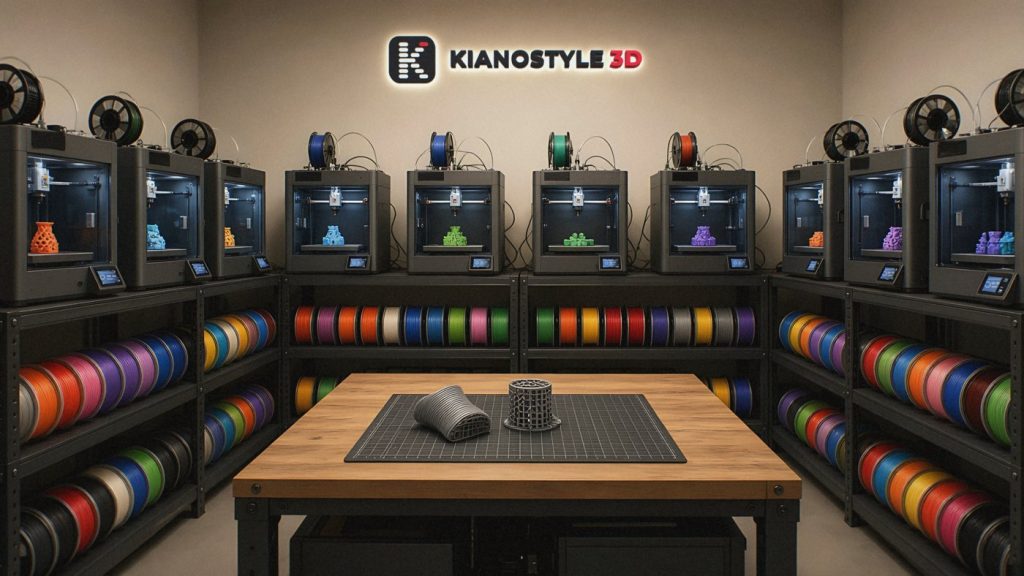
In contrast to flat boards where artwork is merely pressed or inked across a planar sheet, dimensional signs possess actual physical thickness. Across the broader industry, this relief is traditionally generated via laser-cut plastic, shaped sheet metal, built-up hollow fabrications, layered boards, or spacer mounts. At KianoStyle, our Somerset workshop crafts this depth entirely through additive FDM manufacturing using PLA or PETG polymers.
This structural relief fundamentally alters how the installation catches natural illumination. Even without electrical lighting, an unlit display generates subtle highlights and natural lowlights across the working day, creating enhanced visual interest when observed from shifting vantage points.
Relief displays prove equally adaptable whether serving as a primary trading title, a corporate motif, a feature wall backdrop, interior wayfinding, or sheltered exterior markers.
How Is 3D Signage Different From Flat Signage?
The defining distinction centres entirely on structural depth.
Planar displays display all graphical elements and lettering directly across a flat substrate. By comparison, three-dimensional signs employ raised components that stand proudly away from the backplate or perimeter wall.
When comparing the formats side by side, traditional flat graphics sit level against the surface, depend primarily on ink or vinyl film, cast no true shadows, look best solely from straight ahead, necessitate external floodlights, and serve primarily for short-term notices. Dimensional signs feature physical thickness, arise from fabrication or additive printing, generate real shadows, hold visual presence across multiple sightlines, permit internal rear illumination, and act as durable permanent brand identifiers.
Neither approach is inherently superior across every scenario.
Flat sheet displays remain an outstanding, economical vehicle for temporary announcements, intricate photographic content, promotional discount campaigns, and detailed informational rosters.
Dimensional branding excels whenever an organisation seeks an architectural, tactile, and distinctly high-calibre aesthetic.
What Types of 3D Signage Are There?
The umbrella phrase 3D signage spans a wide spectrum of production techniques and construction varieties.
What Are 3D Sign Letters?
Individual sign characters with physical thickness are crafted as standalone entities rather than transferred onto a common flat board.
Across the trade, these can be cut from Perspex sheets, hollow metal, rigid plastic, or lightweight foam, installed flush against plaster or mounted via stand-off spacers. In our own maker studio, we print each letter individually using solid-colour filament.
Independent characters frequently define company nameplates, front-desk greeting lounges, interior trade zones, and building exteriors. Depending on project objectives, these letters can function as passive unlit units or incorporate halo and back illumination using internal LED ribbons.
Substrate selection determines overall weight, outward appearance, and atmospheric resilience, which means indoor setups and outdoor zones require distinct material specifications.
Raised acrylic letters
A conventional commercial method involves cutting individual letters or emblems from glossy plastic sheets using laser tables or CNC routers before mounting them against a vertical wall.
Plastic sheeting yields an ultra-smooth, high-sheen face in assorted primary shades and standard thicknesses. While widely fitted across contemporary corporate interiors, laser plastic relies on subtractive tooling.
For businesses seeking a dependable alternative without glossy acrylic sheets, our 3D printed flat letter wall signs provide cleanly defined characters in matt shades or satin silk PLA that offer tactile presence without mirror reflections.
Dimensional logo signs
A complete brand identity can be translated into three dimensions by manufacturing distinct shapes, lettering clusters, or interlocking layered components.
Various sections can incorporate harmonious filament tones or bespoke structural reliefs to replicate the supplied vector branding with exact fidelity.
For teams wishing to recreate their official company insignia with genuine depth, our bespoke 3D printed business logo wall signs present tailored fabrication choices suited to modern office walls.
Built-up letters
Fabricated or built-up characters present substantially more depth than basic flat-cut sheeting.
Rather than routing a simple shallow profile, craftspeople bend raised side returns around a front face to assemble a hollow volumetric envelope. In our workshop, we achieve identical imposing presence by printing monolithic pieces at 40 mm or 55 mm depths with rigid internal honeycomb matrices.
This structural approach is favoured wherever substantial letter dimensions, bold drop shadows, or internal illumination channels are specified.
Metal letters
Raw aluminium, brushed brass, and polished stainless steel are frequently specified across the sign trade for heavy architectural lettering.
Metallic fabrications can be anodised, chemically patinated, brushed, or wet-painted to match specified commercial palettes.
A satin metal face delivers quiet prestige within legal chambers and corporate headquarters. Where organisations prefer lightweight handling without sheet metal fabrication, our matt metallic gold and silver PLA options emulate refined metal tones without heavy mechanical fixings.
Foam and PVC letters
Expanded high-density PVC and foam boards provide low-mass dimensional shapes when managing modest installation budgets.
Rigid PVC provides an economical avenue for temporary interior retail graphics where structural lightness matters far more than exterior weather endurance.
Such lightweight sheet materials are standard fixtures within pop-up booths, exhibition halls, and brief brand activations where lasting architectural longevity is not a governing factor.
Illuminated 3D signage
Subtle lighting hardware can be integrated within or behind dimensional characters and brand plaques.
Standard trade approaches encompass halo glow around the perimeter, rear illumination, and translucent glowing faces.
Modern displays favour low-voltage LED circuits because they cast vivid, uniform illumination while fitting neatly within shallow housings.
What Materials Are Used for 3D Signs?
Selecting an appropriate core material governs the total sign mass, visual character, weather resistance, fixing technique, and overall suitability for its planned environment.
Acrylic
Cast or extruded acrylic remains a standard option across traditional signmaking operations.
- Ultra-smooth, reflective mirror or gloss face
- Broad array of ready-made factory colours
- Compatibility with fine laser cutting beds
- Relatively light mass compared to solid brass
- Suitability for intricate script lettering
- Effortless bonding for multi-layer composite plaques
Aluminium
Aluminium provides impressive strength-to-weight balance compared to heavier iron alloys while offering robust weather resistance.
Signmakers deploy it extensively for external fascia trays, dimensional roadside lettering, and bespoke folded cladding.
Its face can be anodised, wet-painted, or powder-coated to produce crisp, contemporary architectural finishes.
Stainless steel
Stainless steel delivers a solid, resilient finish suitable where maximum prestige and physical endurance are top priorities.
Brushed steel sign letters remain a favourite among corporate head offices, finance suites, and prestigious building portals.
Safe outdoor deployment depends largely upon selecting marine-grade formulations, suitable grain polishing, and regular maintenance.
PVC
Foamed PVC is an accessible, featherweight plastic predominantly specified across indoor corporate environments.
It routes cleanly into characters and badges before receiving spray paint or foil coatings.
For standard internal commercial projects, it yields raised lettering without placing significant strain on plaster partitions.
Foam
Polystyrene and dense foam lettering represent the lightest option available in the dimensional display industry.
These pieces are ideally fitted across temporary trade show displays, stage backdrops, and showroom presentations rather than exterior walls.
They allow decorators to build significant letter thickness without imposing structural weight on display boards.
Wood
Natural timber brings organic warmth and artisan texture to business branding.
Assorted wood grains, tinted woodstains, and clear sealants produce wildly varying visuals, although durability outdoors relies heavily on continuous protective oiling. For an indoor equivalent, our wood-fill PLA incorporates genuine wood fibres within the polymer spool, creating an earthy grain appearance.
What Are the Benefits of 3D Signage?
Stronger visual impact
Structural relief dramatically transforms a brand graphic’s physical presence.
Real dimensional shapes form genuine ambient drop shadows rather than relying on printed optical illusions. This depth commands visual attention and entices observers to linger.
Improved visibility
Raised branding remains distinctly legible across broad angles because the protruding shapes catch overhead and lateral light.
Exterior facades routinely mount dimensional characters as their primary visual identifier for this exact readability advantage.
Adding a soft backlight enhances recognition during twilight hours or across dimly lit office corridors.
Professional appearance
A well-crafted dimensional display signals that an organisation is established, permanent, and attentive to fine detail.
Substrate textures and sheens can be matched to corporate values, whether through subtle matt PLA tones, satin silk sheens, or gentle warm-white backlighting.
Brand recognition and identity
Maintaining uniform graphic standards across both online channels and physical facilities cements corporate identity.
A tactile logo piece creates a memorable visual anchor for arriving clients, transforming digital artwork into a tangible physical statement.
Uniting authentic depth with precise filament tones ensures the signage communicates your organisation’s identity rather than presenting generic office lettering.
Design flexibility
Modern relief signage extends well beyond basic plain alphabet sets.
Custom fabrication allows creators to merge:
- Bespoke typography
- Complex logo crests
- Vector graphic symbols
- Multi-part material schemes
- Stepped relief depths
- Indirect rear illumination
- Layered component plaques
- Contrasting matt and silk textures
Lighting options
Dimensional forms pair effortlessly with lighting hardware because their rear depth conceals fixtures while generating engaging optical effects.
Halo-illuminated arrangements offer a prime demonstration.
Low-voltage LEDs reflect light against the rear wall plane, throwing a delicate atmospheric radiance around each character perimeter.
Where Is 3D Signage Used?
Office receptions
Corporate greeting areas represent the most frequent setting for tactile logo displays.
A dimensional plaque acts as an authoritative centrepiece positioned directly behind the front desk, setting the tone for arriving guests.
If your team is planning an entrance upgrade, our dedicated office logo signs collection showcases tailored solutions crafted for professional suites.
Offices
Dimensional branding carries visual continuity throughout extensive workplace environments, including:
- Prominent company emblems
- Departmental identification
- Boardroom and meeting space markers
- Corridor wayfinding elements
- Inspirational brand mottos
- Feature wall focal installations
Retail environments
Retailers utilise dimensional signage both across their outward street fronts and throughout interior sales floors.
Exterior fascias identify the outlet from down the high street, while interior 3D graphics segment merchandise departments, highlight featured ranges, and elevate checkout areas.
Amid crowded shopping malls, dimensional elements cut through competing visual clutter to draw pedestrian footfall straight to the threshold.
Exterior buildings
Architectural lettering can be anchored directly to building facades or secured against intermediate composite panels.
For outdoor installations, substrate selection and structural resilience require careful thought because signs endure persistent rainfall, intense UV exposure, winter frost, and gusts.
Our outdoor 3D signs selection details resilient PETG wall plaques developed specifically for sheltered external thresholds and porch zones.
Hospitality spaces
Boutique hotels, dining rooms, craft cafes, and leisure venues deploy dimensional signs for:
- Front facade branding
- Foyer reception features
- Internal directional signposts
- Guest suite identification
- Atmospheric decorative logo backdrops
Exhibitions and events
Portable 3D characters provide strong brand focal points across trade expos, conferences, and launch days.
Lightweight dimensional lettering and custom standalone logos create vibrant photo walls without imposing cumbersome transport or heavy rigging requirements.
Can 3D Signs Be Used Outdoors?
Yes, though not all dimensional materials withstand exposure to every British weather condition.
A sign’s base polymer, exterior finish, assembly method, and mounting hardware must align with its specific environment.
Outdoor displays inevitably face:
- Driving rainfall
- Sunlight and UV degradation
- Wind buffet and vibration
- Seasonal thermal swings
- Urban soot and air pollution
- Salt-laden coastal air
- Continuous thermal expansion cycles
Selecting the right outdoor specification
For fully open exterior walls, heavy metals like treated aluminium and marine-grade stainless steel are standard choices.
Where 3D printing is specified, we fabricate outdoor items using tough, weather-resistant PETG filament tailored for sheltered outdoor porches and shop doorways. Standard PLA filament must remain indoors, as it softens above 50°C under direct summer heat.
Outdoor fixings also demand mechanical fixings or heavy-duty exterior anchors rather than lightweight interior foam tape.
Can 3D Signs Be Illuminated?
Yes. Adding lighting to three-dimensional lettering is a reliable way to boost evening visibility.
Halo-lit signs
Halo lettering stands off the mounting substrate via concealed spacers.
Internal LED ribbons face backwards against the wall, casting a soft, gentle aura around the silhouette of each letter.
This arrangement delivers an understated, sophisticated glow without shining bare LED diodes directly into viewers’ eyes.
Backlit signs
Backlit displays install illumination hardware directly behind the brand components to create crisp separation from the background.
In our workshop, our backlit logo signs use solid, opaque PLA shapes mounted over an integrated back-tray that holds mains-powered LED strips, bathing the wall in clean white or RGB hues.
The resulting lighting spread depends on letter return depths and the offset distance from the wall.
Face-lit letters
Certain built-up commercial letters feature translucent front panels that emit light forwards.
These provide brilliant legibility across high-street environments after dark.
Any illuminated project requires advance planning for cable conduits, plug sockets, driver storage, and safe maintenance access.
How Are 3D Signs Made?
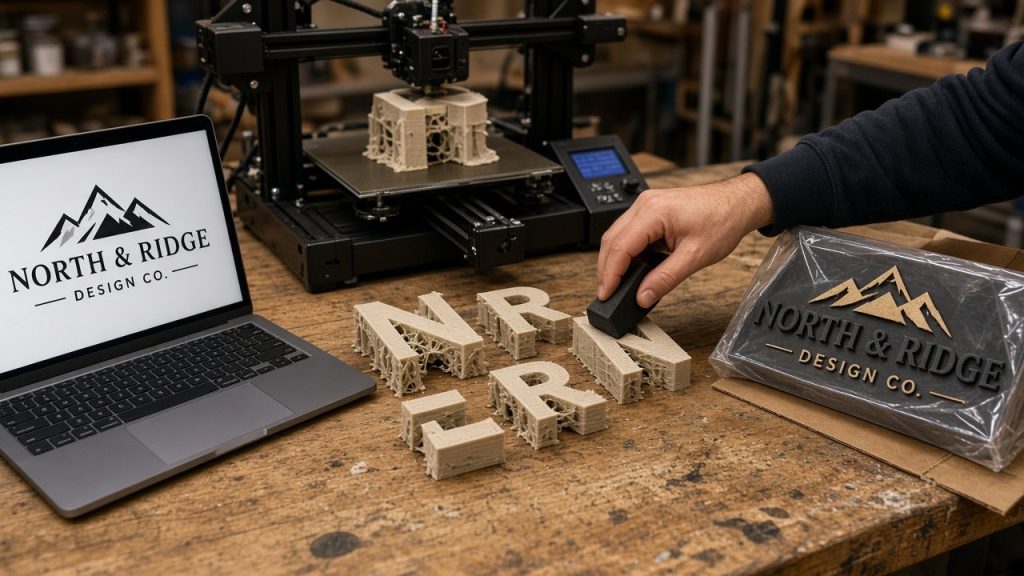
While exact production workflows depend on the selected medium, most custom projects pass through standard production milestones.
1. Artwork preparation
Client artwork is converted into clean vector outlines.
Our technicians inspect line weights, kerning, and delicate details to ensure all features translate cleanly into additive print paths.
2. Material selection
Substrates and filaments are determined by assessing several technical requirements:
- Internal placement or sheltered outdoor exposure
- Desired return depth (such as 20 mm, 40 mm, or 55 mm)
- Accurate brand colour reproduction
- Surface finish, from matt PLA to silk satin sheen
- Overall installation weight
- Inclusion of LED illumination
- Receiving wall construction
- Project budget limits
3. Cutting or fabrication
In traditional shops, sheet substrates pass through flatbed CNC routers or laser heads. Built-up characters require manual sheet bending and soldered returns.
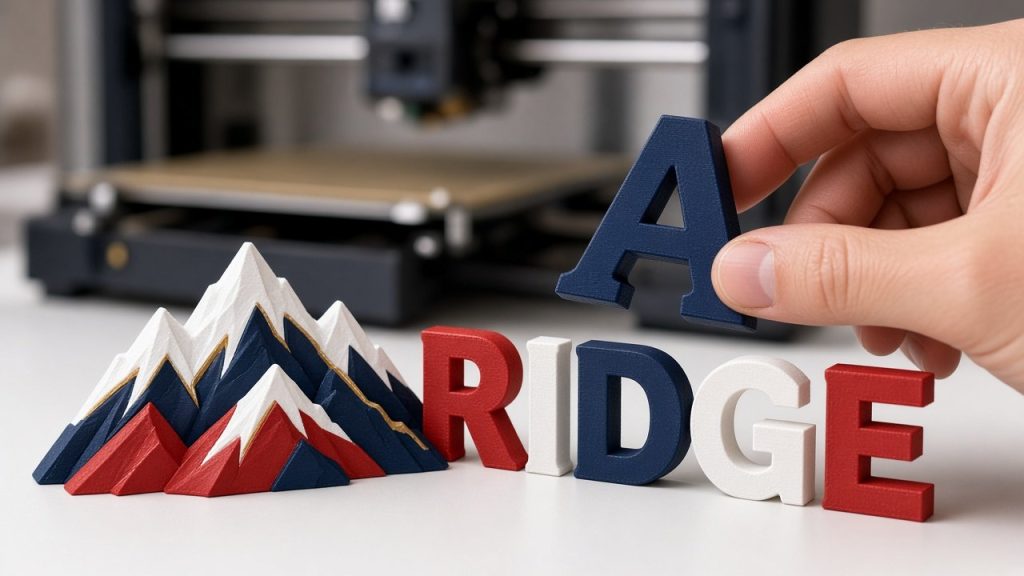
In our Weston-super-Mare workshop, we 3D print each component layer by layer using FDM printers. Every colour is printed as a distinct, solid piece so the colour runs entirely through the part.
4. Finishing
Traditional pieces may undergo powder-coating, wet spraying, or edge polishing.
With KianoStyle 3D printing, finishes come directly from the chosen filament (matt, silk, metallic, or wood-fill), eliminating painted topcoats that can chip.
5. Lighting
When illumination is specified, low-voltage LED ribbon circuits, wiring channels, and plug-in transformers are fitted securely into the rear housings.
6. Installation preparation
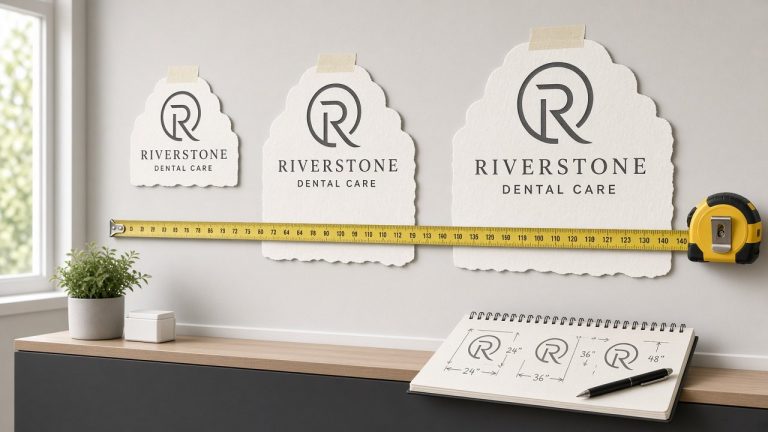
Full-scale paper or cardboard templates are produced to guarantee that every individual letter is aligned, spaced, and levelled accurately during mounting.
How Are 3D Signs Installed?
The right mounting method depends on letter thickness, total weight, and the construction of the wall.
Direct or flush mounting
Letters can be adhered directly against a smooth wall surface using strong industrial foam fixing pads.
This provides a clean, neat aesthetic without visible gaps between the letters and the plaster.
Stand-off mounting
Stand-off fixtures position the sign elements slightly proud of the wall plane.
This offset gap amplifies natural shadow play and gives the display extra three-dimensional prominence.
Stand-offs also provide essential clearance for backlights to spread their glow.
Mechanical fixing
Heavy commercial metal signs mandate mechanical screws, wall plugs, and locators suited to masonry or stud partitions.
Substrates like brickwork, plasterboard, timber panelling, and glass all require tailored hardware solutions.
While we provide high-tack adhesive pads and full-size alignment templates for DIY fitting, we do not provide on-site installation services.
How Do You Choose the Right 3D Sign?
Always evaluate your physical installation environment before settling on a specific visual style.
Where will the sign be installed?
A climate-controlled indoor reception space involves very different technical parameters from a wind-buffeted, damp exterior entrance.
How far away will people view it?
Signage designed to be seen across a wide foyer or down an aisle demands deeper profiles and pronounced colour contrast.
Consider viewing angles, the speed of foot traffic, and how quickly people need to identify your brand.
What is the wall surface?
Plasterboard, bare brick, glass partitions, and wooden panelling each interact differently with adhesive pads and screws.
Does it need lighting?
Assess both your brand aesthetic and the room’s ambient light levels.
A sunlit reception may look stunning with unlit matt letters, whereas a dimmer corridor or evening space benefits greatly from an illuminated halo display.
What suits the brand?
A creative agency might select silk PLA with a vibrant sheen, whereas an accountancy firm may favour subtle matt metallic tones.
Your sign should authentically mirror your business personality rather than chasing fleeting design fads.
Is it indoors or outdoors?
Always match the polymer to the setting: indoor rooms call for versatile PLA, while sheltered outdoor doorways require weather-resistant PETG.
How much maintenance is practical?
Consider routine cleaning needs, particularly in high-traffic or dusty settings.
KianoStyle 3D printed signs require only a gentle dusting with a soft dry cloth; avoid harsh chemical solvents and keep PLA away from direct heat above 50°C. Browse our custom 3D logo signs to discover the ideal finish for your workplace.
Frequently asked questions
What does 3D signage mean?
Dimensional signage refers to signs where letters, emblems, and graphic features feature genuine physical depth, protruding outward from the wall rather than being printed flat onto a panel.
What is the difference between 2D and 3D signage?
Planar 2D signs display graphics directly across a flat sheet. In contrast, 3D signs use raised, fabricated, or additive-printed components that generate natural drop shadows, tactile depth, and shifting highlights.
What materials are used for 3D signs?
The sign industry commonly uses acrylic, aluminium, stainless steel, PVC, foam, and timber. In our workshop, we specialise in 3D printed signs using solid-colour PLA and weather-resistant PETG filaments.
Can 3D signage be used outdoors?
Yes, provided the construction matches external conditions. While conventional signmakers use treated metals or acrylics, our outdoor products are 3D printed in weather-resistant PETG designed for sheltered porches and covered entryways.
Can 3D signs be illuminated?
Yes. Three-dimensional signs can incorporate low-voltage LEDs to cast a soft halo on the back wall, illuminate character faces, or provide rear backlighting.
How are 3D letters fixed to a wall?
Fixing options include flush mounting with heavy-duty foam adhesive pads, raised stand-off spacers, or mechanical screws. KianoStyle supplies strong pre-applied foam pads and full-size paper templates for straightforward DIY fitting.
Are 3D signs suitable for office reception walls?
Yes. Reception foyers represent the most popular setting for dimensional signs, giving visiting clients a polished, memorable first impression directly behind the greeting desk.
How long does 3D signage last?
Durability varies according to material choice, location, and maintenance. Well-cared-for indoor 3D printed PLA signs kept away from intense heat sources will retain their colour and structural integrity for years.
Ready to Bring Your Logo into Three Dimensions?
Send us your vector artwork for a free digital proof and tailored quote. Every KianoStyle sign is 3D printed in our Somerset workshop with free UK tracked delivery.