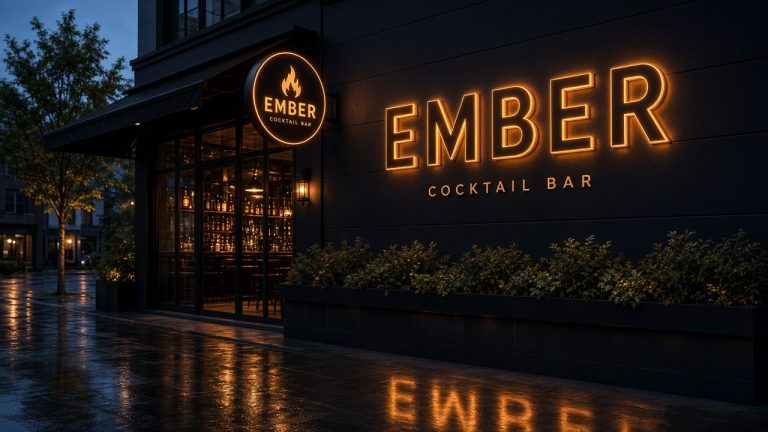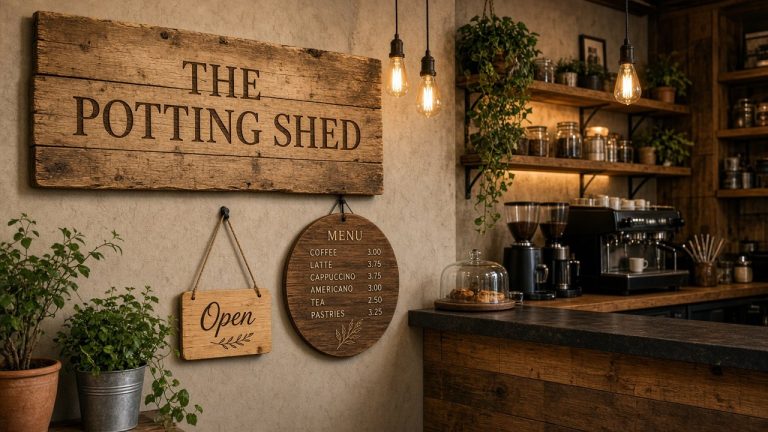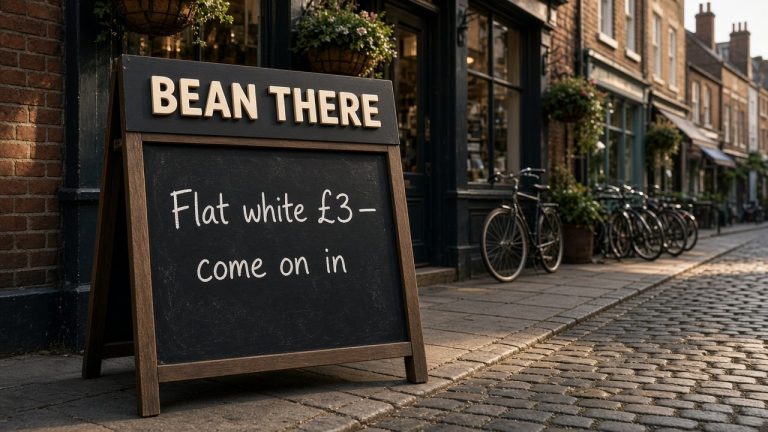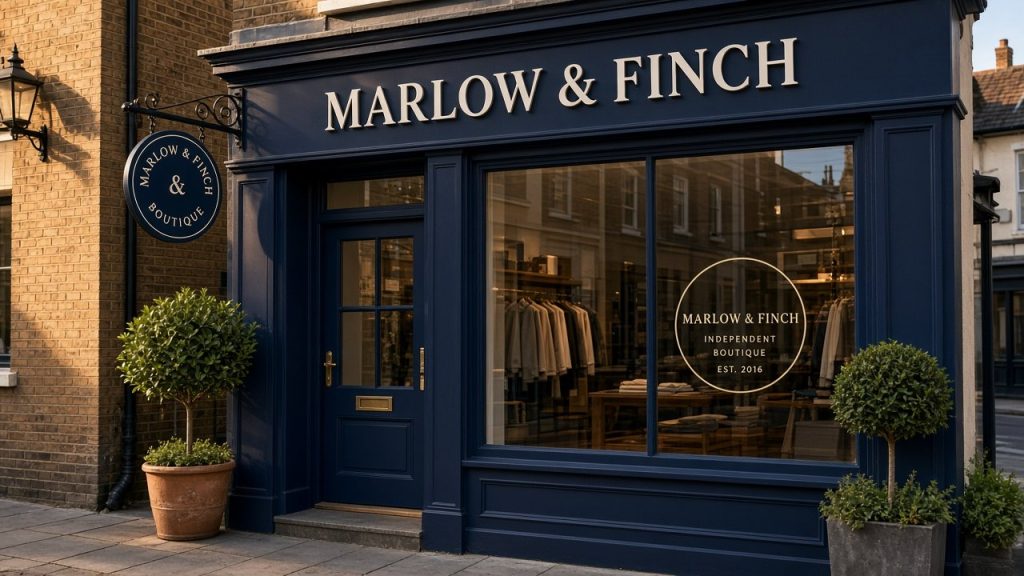
A shopfront sign serves as the primary visual introduction to your company. Whether operating an independent boutique along a quiet side lane, a modern salon on a bustling parade, or an appointment clinic inside a commercial park, distinctive commercial branding commands attention from afar and draws shoppers over your threshold. Thoughtfully executed displays noticeably elevate foot traffic, yet business owners frequently hurry through signage decisions without resolving practical display requirements.
Carefully planned fascia lettering ensures your premises remain instantly recognisable, conveys high professional standards, and differentiates your venture from nearby competition. An accomplished retail sign must register instantly while explaining your offerings within seconds. This comprehensive handbook explores the vital considerations involved in planning retail displays, addressing practical objectives, viewing angles, text clarity, styling, and material suitability across outdoor plaques, freestanding street boards, and interior feature walls.
Key Takeaways
- Decide what the sign must do and where it will be read from before choosing a style.
- Readable fonts, strong colour contrast and generous spacing matter more than decoration.
- Match the sign to your brand colours and logo so it feels part of your business.
- Choose materials for the location – PETG or ASA for outdoor signs, PLA for indoors.
- Always approve a proof and check local rules for exterior signs before you order.
Start With the Sign’s Purpose and Position
Prior to selecting dimensions or ordering hardware, clarify precisely what the installation must accomplish. An external fascia marker confirms your identity from across the street. A street-level display captures pedestrians strolling past the door. An internal feature display cements brand identity behind your service counter or reception desk. Each variant performs a distinctive task, meaning most commercial premises benefit from combining multiple display formats.
Evaluate these environmental aspects prior to ordering:
- Customer travel lines: Determine the primary direction of pedestrian and vehicular arrival. Approaching through an intimate alleyway demands different letter heights than facing a broad multi-lane roadway. Well-placed displays achieve optimum visibility when positioned directly along natural lines of sight.
- Sightline barriers: Account for nearby projecting signs, pull-out fabric canopies, neighbouring trees, or decorative planters that could obstruct clear angles from the pavement.
- Ambient illumination: Observe the shopfront at varying hours to evaluate shadow patterns, daylight shifts, and municipal street lighting. Note that while traditional backlit signs provide nighttime impact, our workshop crafts solid, non-illuminated dimensional pieces, making ambient light assessment crucial.
- Observation distance: Scale up your graphics proportionally if viewers will stand considerable distances away. Always engineer the dimensions around the physical viewing context.
Design Essentials: Readability, Fonts and Colour Contrast
A high-performing storefront sign communicates its core message in an instant. Aim for a layout that onlookers can digest in under five seconds, as passing motorists and hurried shoppers will not pause to read detailed paragraphs.
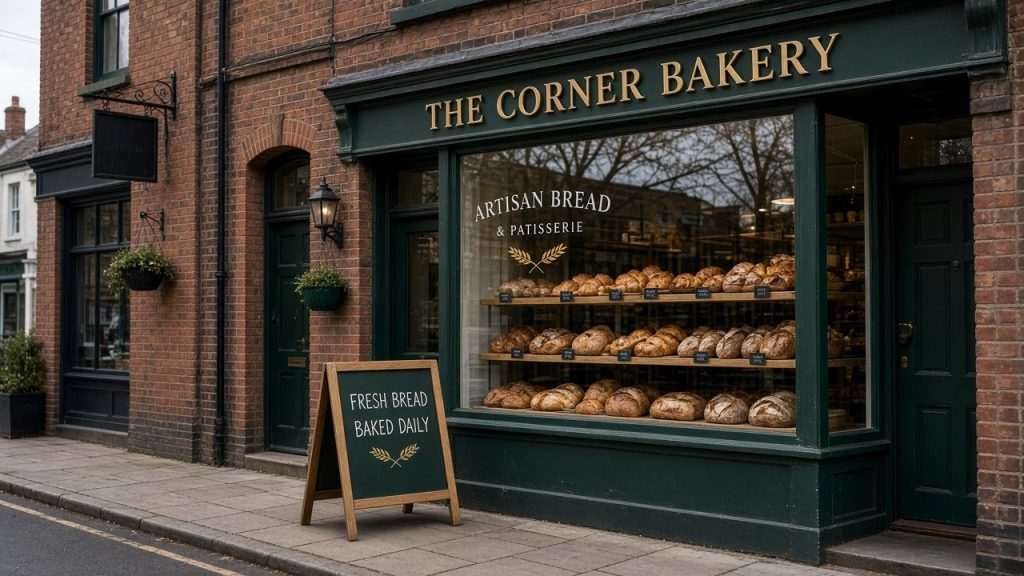
Keep your wording minimal. A reliable signage framework features your trading name, a concise summary phrase, and perhaps a single extra detail. For example, a bakery might show its brand alongside artisan breads, while a beauty clinic might incorporate a short domain name if space permits. Avoid cluttering the face with telephone numbers, service menus, or auxiliary notices that dilute your main identity.
Select legible typefaces. Clean, well-spaced type always takes precedence over complex decorative scripts. Deploy sturdy, unfussy fonts for primary wording to preserve clarity at distance, reserving ornate cursive styling for minor accents or short, familiar monograms. Furthermore, sentence case or title case lettering usually proves far simpler to read across long phrases than blocks of uppercase characters.
Emphasise tonal contrast. Distinct separation between background tones and lettering colours guarantees high legibility under changing weather conditions. Pair dark lettering against pale backdrops, or mount bright typography against deep surfaces. Crisp colour contrast paired with generous sizing ensures your lettering remains legible even on overcast afternoons.
Incorporate negative space. Contemporary styling leans towards uncluttered layouts with a single dominant visual element. Providing ample breathing room around your typography looks considerably smarter than squeezing graphics right up against every border.
Stick faithfully to established brand palettes, yet verify that your chosen pairing delivers sharp tonal distinction. Always inspect scaled design proofs from simulated viewing distances before signing off on manufacture.
Aligning Your Shop Sign With Your Brand
Storefront signage ought to feel entirely integrated with your broader visual branding. Maintaining uniform colours, fonts, and graphic motifs reinforces customer familiarity, whether patrons discover your premises on foot, browse your online shop, or handle printed stationery.
Customised business signage showcases your venture’s character and trade. Select one memorable graphic hook, such as a stylised emblem shape or an unmistakable hue, to anchor your visual identity. Surface treatments also alter visual perception: a smooth, non-reflective matt finish provides an understated, contemporary ambience, whereas a silk metallic sheen creates heightened decorative appeal. Make sure to select materials engineered specifically for their intended environment, whether that involves dry interiors or sheltered outdoor doorways.
Distinctive, professional signage builds lasting brand recall, embedding your trading style in visitors’ minds well before they enter your shop. Presenting a coordinated look across outdoor fascias, portable pavement displays, and interior customer areas establishes a cohesive visual standard.
Always provide the highest resolution artwork files alongside specific Pantone or hex values. At KianoStyle, our team prepares an accurate digital proof for review prior to manufacture, giving you complete reassurance over proportions, typography, and layered finishes.
Choosing the Right Type of Shop Sign
A broad range of establishments deploy an assortment of sign styles because facade plaques, street-level boards, and reception pieces fulfil separate commercial tasks. While retail strips often feature temporary fabric banners, swinging projecting brackets, or digital advertising displays, permanent dimensional signage forms the foundation of commercial identity. Selecting the ideal setup involves balancing your architecture, customer journey, and available budget.
At KianoStyle, we craft all signs in our North Somerset workshop using precision 3D printing techniques rather than conventional sheet plastics or metals. Discover the primary display categories below to establish the best setup for your site.
Outdoor and Shopfront Signs
Exterior wall displays represent the main identification marker for any commercial building, capturing pedestrian interest and steering passing trade directly towards the entrance. Across the wider sign sector, outdoor fascia panels are manufactured from diverse materials designed to handle severe weather, from heavy aluminium composites to thick acrylics.
For outdoor applications, our workshop 3D prints robust plaques in weather-resistant PETG filament. Rather than flat printed graphics, our PETG exterior signs feature solid multi-coloured dimensional logos built up in distinct layers. They perform exceptionally well in sheltered exterior positions, including covered entranceways, recessed doorways, and porch surrounds. We recommend confirming your mounting location and environmental exposure so we can advise on PETG suitability.
Tray Signs
In conventional commercial signwriting, tray signs utilise folded aluminium sheet to create a deep, box-style fascia panel that conceals rear fixings and provides a smooth surface for applied lettering or illuminated cut-outs. These metal structures are widely used on exposed high-street fascias where complete shopfront coverage is needed.
While KianoStyle does not fabricate sheet-metal sign trays, we produce a distinctive lightweight equivalent using precision 3D printing. We print rigid backing plaques up to 55 mm in profile with internal honeycomb reinforcement, creating substantial architectural depth without excessive weight. Large installations are printed in modular interlocking segments and pre-assembled with raised multi-colour logo detailing.
Wooden A-Board Pavement Signs
Freestanding pavement signs attract foot traffic moving along pavements, making them an indispensable marketing tool for espresso bars, boutique shops, and seasonal pop-ups. Commercial options across the industry frequently include timber frames decorated with applied vinyl lettering or flat UV inks.
Our workshop takes an honest, craft-led approach: we construct bespoke dual-sided pavement boards using heavy-duty 3D printed PETG panels connected by reinforced printed hinges, with your logo inlaid or raised in solid filament colours. Alternatively, through our dedicated laser workshop, we produce natural birch plywood A-boards finished with genuine laser engraving. We deliberately steer clear of UV printing, ensuring your street displays rely on tactile depth and authentic material quality. Remember to bring freestanding displays indoors during severe weather and overnight.
Interior Logo Wall Signs
An internal dimensional logo completes your customer journey, sitting handsomely behind till counters, waiting lounges, or reception desks. Dimensional wall lettering introduces genuine physical relief and subtle natural drop shadows, lifting your branding off flat plasterwork.
While many sign companies rely on flat laser-cut acrylic sheet or printed vinyl decals, KianoStyle 3D prints every indoor wall sign from scratch in durable PLA filament. Because each colour component is printed as a solid part using through-coloured material, your branding will never peel or scratch off. We offer rich matt surfaces, warm metallic golds and silvers, as well as satin silk sheens that deliver a refined decorative feel without the artificial gloss of plastic perspex.
Choosing Materials and Finishes Carefully
Material choices directly determine a sign’s aesthetic character, structural rigidity, and overall lifespan. Across the broader signmaking industry, contractors frequently specify sheet aluminium, expanded PVC foam, or clear acrylic for general installations, while timber signs provide a rustic, organic appeal.
At KianoStyle, we reject petroleum-heavy acrylic sheets, vinyl wraps, and chemical paint coatings in favour of additive manufacturing using quality bioplastics. We manufacture indoor signs from PLA filament and sheltered outdoor pieces from hard-wearing PETG. Because we do not paint our work, surface finishes come directly from specialised filament formulations: non-glare matt colours, subtle metallic golds, silk-sheen silvers, and timber-fill filaments containing authentic recycled wood fibres. Please note that our silk options deliver an attractive satin lustre rather than a mirror reflection, and subtle layer striations remain visible upon close inspection. PLA is strictly formulated for interior spaces away from intense heat sources above 50°C, whereas PETG withstands outdoor moisture effortlessly.
Planning, Proofing and Installation
A seamless sign order begins by surveying your display wall, noting rough dimensions, and compiling clean logo files. Taking wide and close-up photographs of your interior plaster, storefront brickwork, or entrance doorway assists our workshop in recommending the ideal profile depth and mounting style.
Every KianoStyle piece is manufactured to order following your direct approval. Once you submit artwork, we generate a comprehensive digital visual showing scale, colour allocation, and dimensions, with one complimentary amendment cycle included. When the layout is signed off, our makers commence printing, with dispatch generally taking five to seven business days via fully insured, tracked UK parcel carriers.
We do not offer physical on-site fitting services. Instead, we supply our signage as straightforward self-installation packages. Each delivery includes pre-applied industrial foam adhesive pads where appropriate, a precision card positioning template, and detailed mounting guidance, allowing you to achieve professional alignment without specialist tools.
Bringing Your Shop Sign Design Together
A good shop sign is clear, on-brand and made for its spot. Start with purpose and position, keep the design simple and legible, and choose a material that suits indoor or outdoor use. Then check a proof at real size before anything is made.
If you would like a second opinion, send us your logo and a photo of your shopfront – we will suggest a size and finish and send a free digital proof.
Frequently asked questions
Do I Need Permission for a New Shop Sign?
Certain exterior commercial signage, particularly illuminated fascias or oversized projections, may require formal Advertisement Consent from your local council planning department. You should consult your building landlord and examine local council regulations prior to commissioning outdoor signs. The UK government Planning Portal provides independent guidance on commercial signage rules. KianoStyle produces signs to your specifications but does not offer regulatory planning advice.
What Artwork Should I Supply for a Custom Shop Sign?
We achieve the sharpest results from scalable vector files such as AI, EPS, SVG, or high-resolution PDF formats, as these allow us to trace crisp 3D toolpaths. However, if you only hold standard raster images like PNG or JPEG files, our design studio can assess their suitability. You can upload files on the product page or send them directly via email or WhatsApp, and we always provide a digital proof before running our printers.
How Do I Choose Between a Tray Sign and Individual Lettering?
A framed backing plaque consolidates your logo against a uniform coloured ground, which helps disguise uneven masonry or rough wallpaper. Conversely, standalone 3D letters mount directly onto your wall, creating an open, modern architectural look. Your decision should rest on your wall texture, logo composition, and desired visual depth. Our team is always happy to review your wall photos to guide your choice.
Can My Interior Sign Match My Exterior Shop Sign?
Yes, your branding can remain perfectly consistent across every location. However, the filament specifications will differ to match their working environments. Interior wall features are 3D printed in fine-detail PLA with delicate matt or silk finishes, while sheltered doorway signs are printed in durable, heat-tolerant PETG. Providing photos of both display areas allows us to coordinate colours across both materials.
How Large Should a Shop Sign Be?
The correct size depends on overall wall width, observation distances, and the intricacy of your logo lettering. An effective commercial display must be effortlessly legible from typical customer vantage points without overwhelming the surrounding architecture. Supplying rough wall measurements and room photographs helps our makers advise on balanced dimensions that look proportionate.
Ready to Transform Your Storefront Branding?
Explore our complete collection of bespoke 3D printed signs, or upload your artwork today to receive a tailored digital proof and fixed-price quote from our North Somerset workshop.