Commercial display boards have long served as foundational cornerstones for brand identification, yet heading into 2026, visual communication is transforming at an unprecedented pace. Accelerated manufacturing workflows, evolving consumer habits and heightened ecological expectations are fundamentally altering how organisations approach physical branding. Whether you oversee an independent boutique, a contemporary workspace or a bustling hospitality premises, keeping pace with current fabrication styles offers a distinct commercial edge.
Within this overview, we examine the foremost aesthetic movements, progressive fabrication substrates and emerging technical breakthroughs that are defining the modern signage landscape throughout 2026.
The Commercial Display Market: Sustained Expansion and Technological Progress
Electronic screen technology has developed remarkably over recent seasons, becoming a cornerstone asset for forward-thinking enterprises worldwide. Propelled by rapid electronic hardware refinements alongside rising interest in responsive visual touchpoints, the international electronic signage sector continues along an assertive upward path. Market observers foresee sustained compound annual growth well above eight percent through the decade, highlighting persistent appetite for dynamic visual networks across diverse commercial sectors.
High-street stores, leisure operations and tertiary education providers spearhead this momentum, deploying illuminated networks to refine visitor communication and deliver memorable customer interactions. The adoption of modern digital architectures, including wraparound media walls, self-serve terminals and blended reality interfaces, has redefined how organisations interact with their patron base. As commercial display practices advance, companies are prioritising electronic installations that provide instant media refreshes, fluid content scheduling and direct harmony with broader web platforms. This shift represents far more than a passing phase; it is establishing fresh baselines for public-facing engagement.
Sector Adoption: How Different Industries Apply Modern Display Movements
An expanding spectrum of commercial arenas now utilises contemporary display methodologies to revolutionise customer encounters while simplifying internal logistics. Across the retail landscape, interactive shopfront panels provide atmospheric brand immersion, steering consumers across retail floors using contextual notices and focused merchandising prompts. Meanwhile, hospitality destinations employ electronic panels to furnish personalised visitor assistance, covering automated lobby check-ins, instantaneous itinerary feeds and dynamic directional aids.
Educational institutions are similarly updating their internal navigation and messaging networks, outfitting secondary schools and university campuses with central screens to encourage collaborative study and circulate timely notices. Corporate headquarters equally install digital dashboards to improve workforce communication, broadcast company milestones and welcome corporate visitors with branded messaging. With display hardware becoming progressively adaptable and accessible, enterprises across multiple fields are unlocking fresh routes to captivate onlookers, reinforce visual identity and present services with superior convenience.
1. Uncompromising, Stripped-Back Aesthetics
Uncluttered design rules the creative space, yet it presents far greater confidence and intentional clarity in 2026.
- Crisp letterforms paired with pronounced contrast are displacing complicated ornamental typefaces.
- Vibrant colour-saturated blocks guarantee messages remain effortlessly legible from across the room.
- Negative space is positioned deliberately to channel viewing focus onto vital brand emblems.
2. Responsible Sourcing and Conscious Manufacturing
Ecological accountability has shifted from a niche preference into an essential buyer prerequisite across commercial decorating.
Signage sustainability extends beyond raw feedstock alone; it reflects an authentic commitment to transparent, responsible manufacturing that resonates with values-focused consumers.
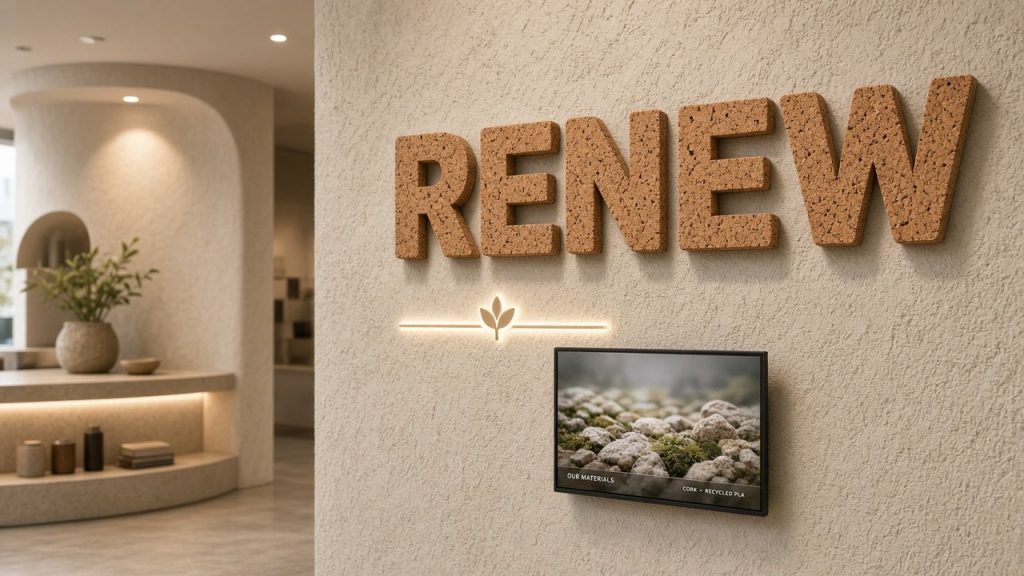
- Salvaged timber, recyclable plastics and bio-based PLA filament derived from plant starches are frequently chosen for corporate suites.
- Plant-fibre composites and compostable polymers are capturing share for short-duration pop-up displays and seasonal promotions.
- Fabrication facilities increasingly employ additive manufacturing techniques that generate negligible swarf, avoiding the heavy waste of subtractive machining.
- Low-emission protective coatings and pure, self-coloured materials eliminate hazardous chemical solvents and ongoing paint fumes.
3. Bespoke Three-Dimensional Lettering for Deeper Visual Impact
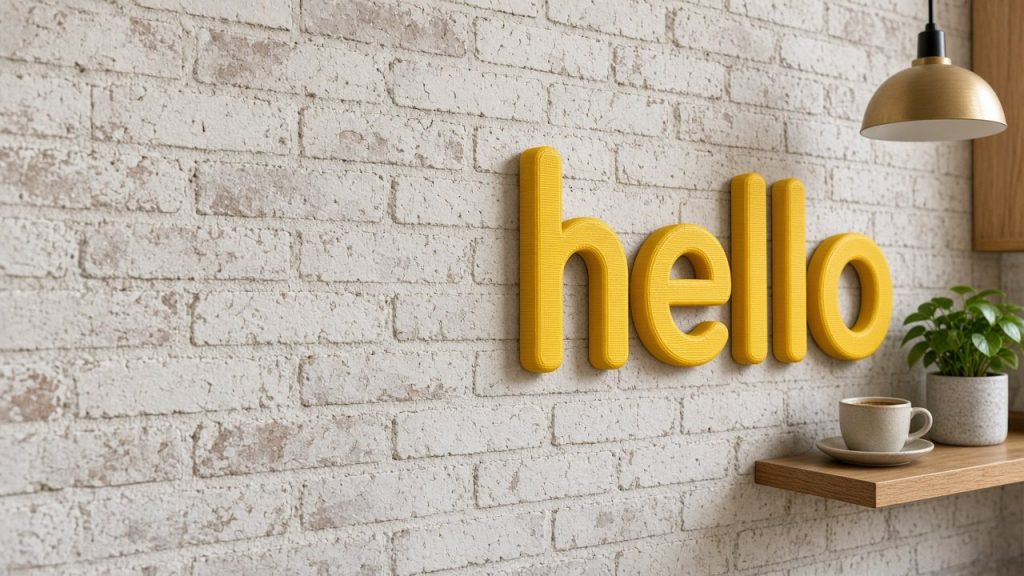
Physical dimensional branding has progressed far beyond flat cutouts with shallow depth. Across 2026, corporate buyers are gravitating towards:
Dimensional business emblems deliver more than mere cosmetic appeal; they establish an inviting, tactile connection that leaves an enduring memory on visitors.
- Complex structural builds that combine contrasting filament textures, such as warm wood-fill bases paired with deep matt accents.
- Raised relief emblems boasting hollow internal infill patterns that yield substantial relief shadows while keeping wall weight minimal.
- Precision-engineered additive lettering finished with bright silk metallic sheens that create subtle satin highlights under ambient interior lighting.
4. Integrated Ambient and Halo Illumination
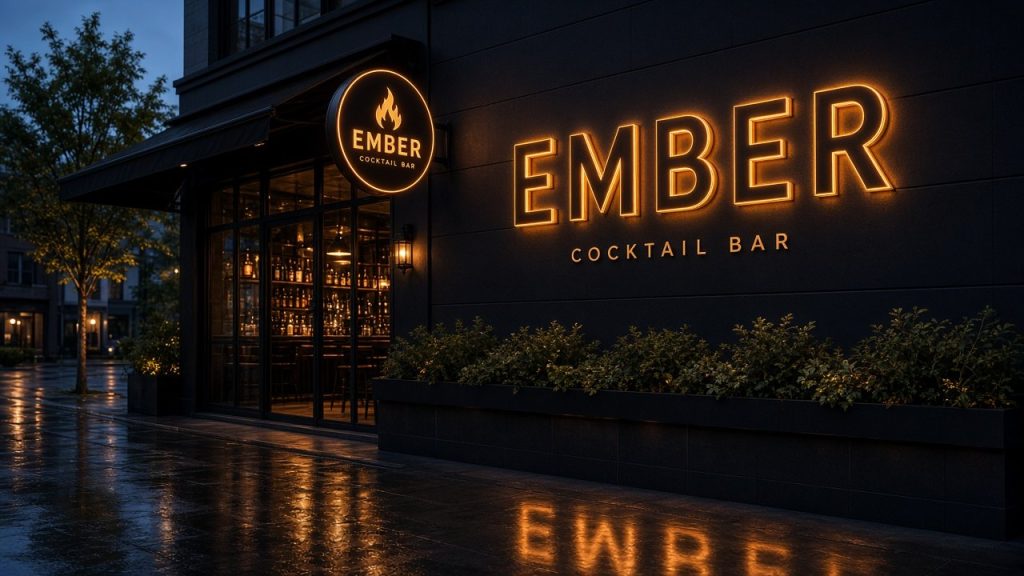
Luminescent backlighting has graced retail fascias for generations, yet the surrounding illumination hardware is advancing rapidly.
Contemporary LED installations operate with significantly greater electrical efficiency and extended lifespans, making them ideal for businesses seeking refined after-dark presence.
- Intelligent power modules that self-regulate output based on room brightness and scheduled operational hours.
- Opaque structural letters mounted upon raised stand-offs to generate a soft halo diffusion against the surrounding plaster.
- Addressable multichannel lighting bands that facilitate seasonal palette adjustments and dynamic event themes.
5. Interactive Screens and Responsive Customer Touchpoints
The technological evolution of commercial displays is proceeding at a remarkable pace:
Responsive glass screens draw audiences in by delivering participatory, customised journeys that capture wandering attention and deepen brand affinity.
This dynamic trajectory is steadily dissolving the traditional boundary between static structural graphics and fluid digital experiences.
- Ultra-crisp commercial monitors are taking the place of conventional paper placards within retail windows.
- Touch-enabled directory boards are becoming the standard expectation across large medical complexes and retail malls.
- Subtly embedded scannable codes encourage passersby to unlock rich digital media directly on their handheld devices.
6. Connected QR Touchpoints and Omnichannel Synergy
Matrix barcodes have established themselves as an indispensable bridge between physical premises and online platforms, delivering uninterrupted harmony between architectural branding and digital content. By incorporating tactile scannable codes into reception plaques or retail features, businesses can effortlessly link on-site visitors to detailed product specifications, members-only offers or primary social channels. This tactile-to-mobile bridge allows customers to navigate your offering at their preferred pace, utilizing their smartphones to review client testimonials, view demonstrations or finalize an order instantly.
Within commercial showrooms, strategically positioned scannable markers assist companies in directing targeted media to distinct demographics, driving user engagement and boosting transaction rates. The capability to adjust linked destination addresses in the background without modifying the physical plaque ensures organisations stay nimble against shifting trading conditions. As firms continue pursuing unified cross-channel strategies, the synthesis of physical three-dimensional markers with mobile destinations serves as a formidable mechanism for nurturing client loyalty.
7. Bespoke Personalisation at Modest Production Volumes
Owing to strides in direct digital fabrication, made-to-order visual assets are now readily affordable for smaller enterprises.
Individually tailored features foster greater personal rapport and grant premises a distinctly crafted character, while adapting graphics to suit distinct audiences maximises everyday visual impact.
- Team titles, operational dates and bespoke department signs can be manufactured in limited single-item batches without hefty tooling charges.
- Additive fabrication allows multi-part solid-colour emblems to be assembled seamlessly without the fragility of applied vinyl decals.
- Custom wall emblems are specifically modelled to capture an organisation’s exact corporate identity rather than forcing stock catalog layouts.
8. Progressive Feedstocks and Functional Finishes
Modern base substrates now perform far more active work than acting as passive background planes:
These technical refinements ensure commercial displays serve not merely as decorative identifiers, but as resilient, hard-wearing interior assets.
- Weather-resistant PETG formulations that endure damp, sheltered entrance conditions without warping or losing structural stability.
- Dust-resistant satin polymers that simplify maintenance routines and wipe clean using ordinary dry lint-free dusters.
- Mineral-infused filaments like faux marble compounds that introduce sophisticated natural veining into lightweight structural panels.
9. Blending Tactile Presence with Digital Brand Assets
A central movement throughout 2026 involves the smooth integration between an organisation’s tangible decor and its digital presence.
With widespread cloud access, brand managers can update destination content on the fly, rendering integrated branding approaches notably agile.
This balanced hybrid strategy keeps an enterprise’s physical environment completely synchronised with its online public profile.
- Reception emblems frequently integrate permanent dimensional community handles and campaign tags to invite social mentions.
- Augmented reality coordinates on corporate panels allow smartphone users to inspect interactive three-dimensional models in virtual space.
- Dynamic destination links point visitors to regularly updated seasonal lunch specials, service brochures or booking calendars.
10. Adaptable Modular Components and Interchangeable Layouts
Enterprises that adjust promotional programmes or internal layouts regularly are adopting reconfigurable sign assemblies.
Adaptable structural assemblies cut down unnecessary scrap, curb ongoing refurbishing expenses and preserve an up-to-the-minute brand presence.
- Interlocking structural trays allow rapid updating of directional panels and department directories without dismantling base fixtures.
- Repositionable lettering sets simplify message alterations on communal noticeboards without purchasing brand new backboards.
- Lightweight freestanding counter pieces and branded desk emblems are gaining significant traction for trade pop-ups and mobile events.
11. Intuitive, Human-Centric Wayfinding
Directional signage is evolving from purely pragmatic pathfinding into an empathetic, visitor-focused welcoming experience.
Within busy hubs such as healthcare clinics and civic centres, visitors depend continuously on intuitive visual indicators to navigate complex layouts with ease.
Modern establishments understand that thoughtful wayfinding extends far beyond decorative branding; it underpins an stress-free visitor journey.
- Clear universal pictograms that facilitate seamless navigation across multilingual and international audiences.
- Systematic zone colour-schemes across sprawling properties to reinforce orientation at glance height.
- Distinct dimensional reliefs that furnish high physical contrast to support visually impaired patrons.
Long-Term Evolution or Transitory Novelty? The Resilience of 2026 Display Shifts
While sceptics might wonder whether these current manufacturing and digital shifts are merely fleeting fads, measurable evidence reveals enduring structural changes across the commercial sign trade. The broad embrace of digital integration and precision additive production stems both from ongoing engineering progress and an insistent public desire for responsive, tangible visual interactions. Modern enterprises recognize the enduring return of these progressive techniques, not merely for their communicative versatility, but also for their cleaner operational footprint, minimising machining waste and reducing superfluous energy demand compared with historic fabrication routes.
Emerging capabilities such as automated 3D print slicing, computer-aided file conversions and cloud-managed digital networks are further widening what commercial fabricators can achieve, making hyper-customised branding accessible at sensible price tiers. As the commercial display trade continues its forward march, forward-looking brands that invest in progressive, resource-conscious solutions will remain superbly placed to captivate target demographics, elevate workspace standards and power their business momentum. Ultimately, these 2026 display movements represent far more than surface-level trends; they signal an essential transformation in how modern enterprises project their identity.
Concluding Thoughts
The visual identity landscape in 2026 represents an exciting convergence of imaginative design, responsible fabrication and smart technology, with innovative production methods setting fresh baselines for commercial displays. From eco-conscious bio-polymers and ambient halo backlighting to integrated mobile touchpoints, modern business owners enjoy richer resources than ever before to command attention and convey their core message.
If you are planning an update to your workspace or shopfront branding this year, draw motivation from these evolving styles and select dimensional designs that not only catch the eye, but authentically reflect your enterprise’s distinct identity and craftsmanship values.
Bring Your Brand into Dimension for 2026
Upgrade your corporate workspace or retail counter with a bespoke 3D printed business sign made from premium PLA or PETG. Request a free quote and receive your digital layout preview before production begins in our Somerset workshop.